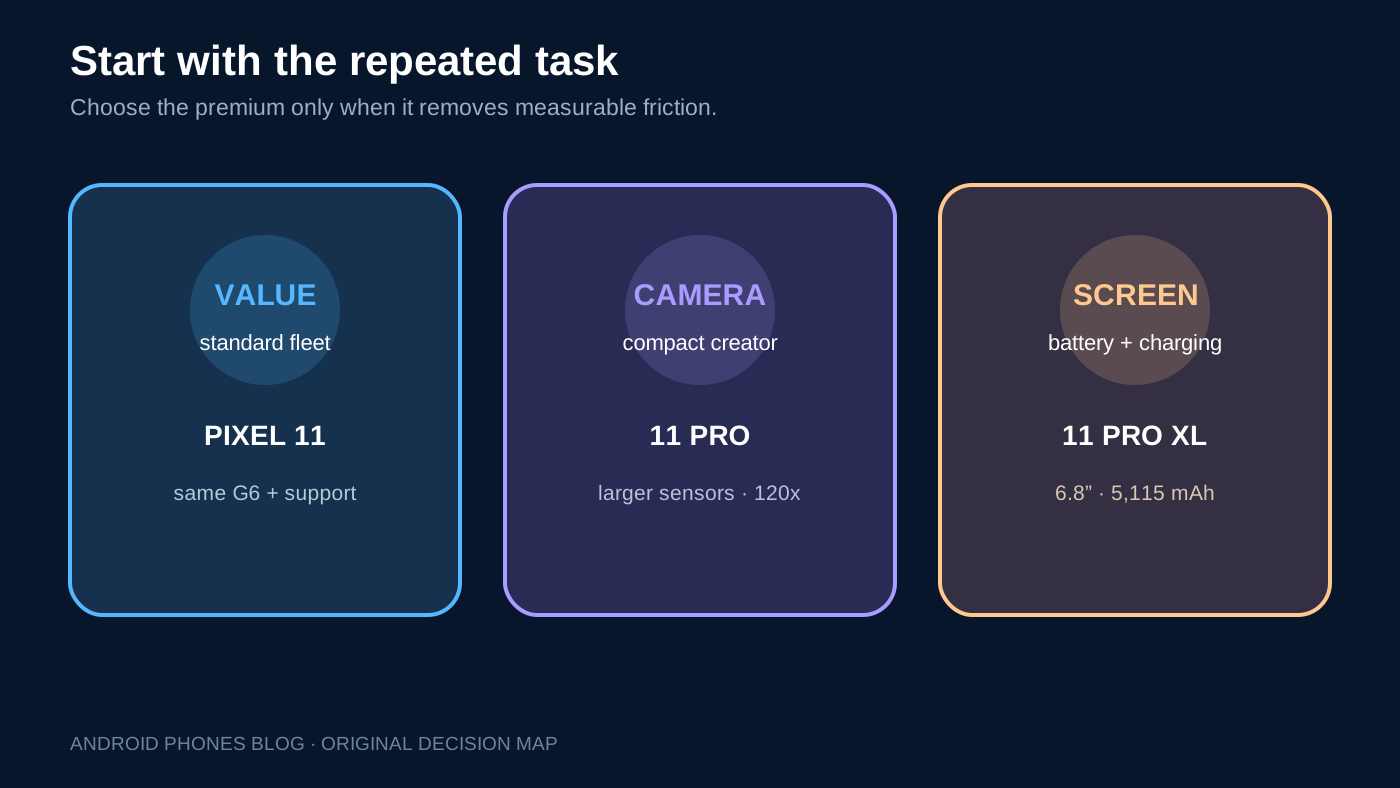
Choose Pixel 11 for the best balance of price, compact size, 5x optical zoom and seven-year support. Choose Pixel 11 Pro when you need Google’s strongest camera system in a 6.3-inch phone. Choose Pixel 11 Pro XL when a 6.8-inch display, the largest battery and the fastest wired charging justify the extra size and cost.
Key takeaways
- All three use Google Tensor G6, the Titan M3 security coprocessor, 12 GB of RAM at 256 GB, Pixelsnap/Qi2.2 charging and seven years of updates.
- Pixel 11 is no longer a camera-light base model: it includes wide, ultrawide and 5x telephoto cameras, but its smaller sensors and 30x zoom remain below the Pro camera system.
- Pixel 11 Pro and Pro XL share the same core camera and processor specification. Choose between them mainly by physical size, battery and charging.
- Only the Pro phones include HiLight, Google’s camera-bar LED system for glanceable notifications and hands-free Gemini status.
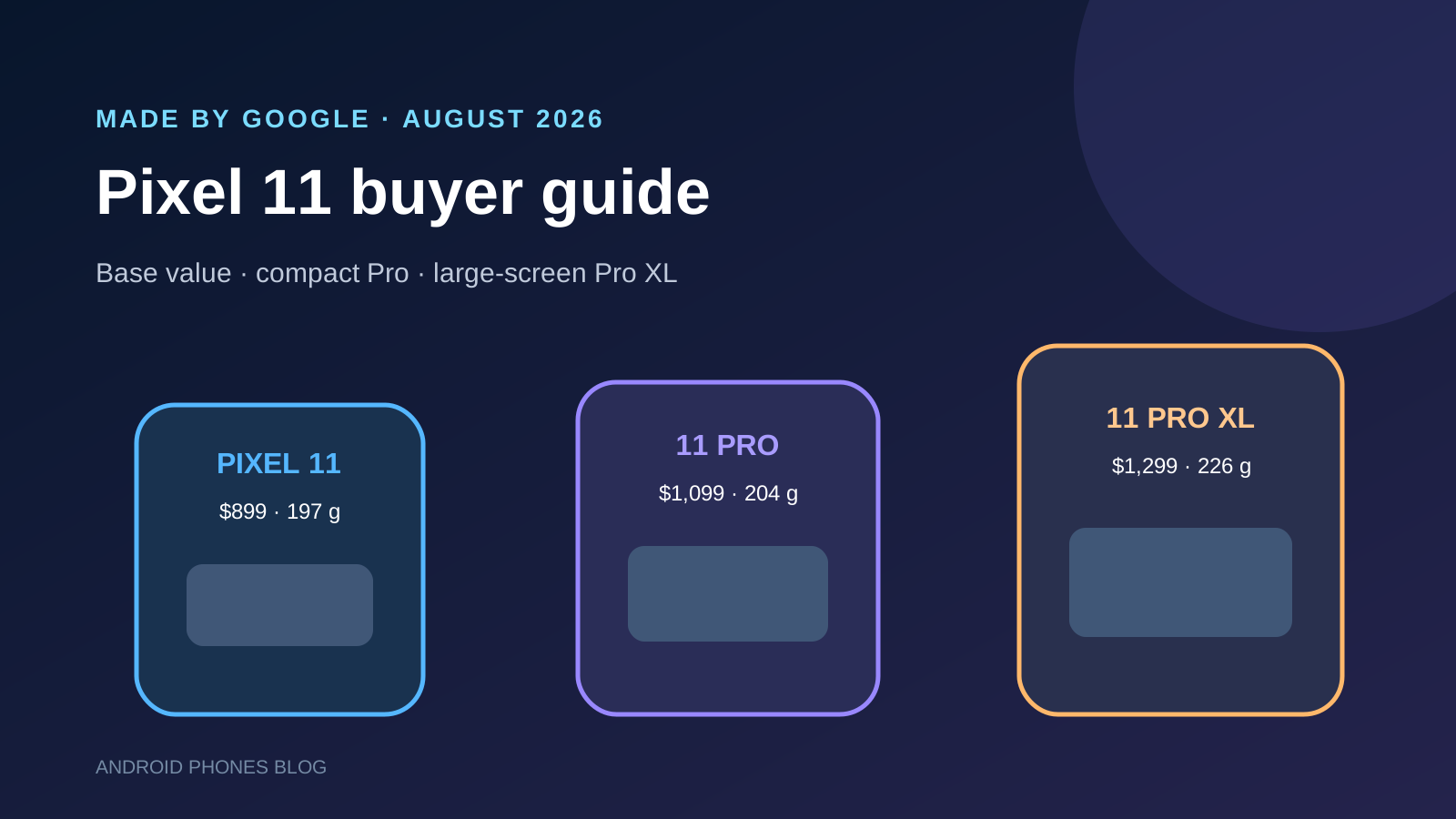
- U.S. launch prices started at $899, $1,099 and $1,299 respectively. Regional model, bands, warranty, AI availability and promotions still need written confirmation.
Pixel 11 vs Pixel 11 Pro vs Pro XL at a glance
Google announced the three non-folding Pixel 11 models on August 12, 2026 and put them on sale August 20. The lineup is easier to understand than its feature list suggests: Pixel 11 is the value flagship, Pixel 11 Pro is the compact camera flagship and Pixel 11 Pro XL is the large-screen endurance model.
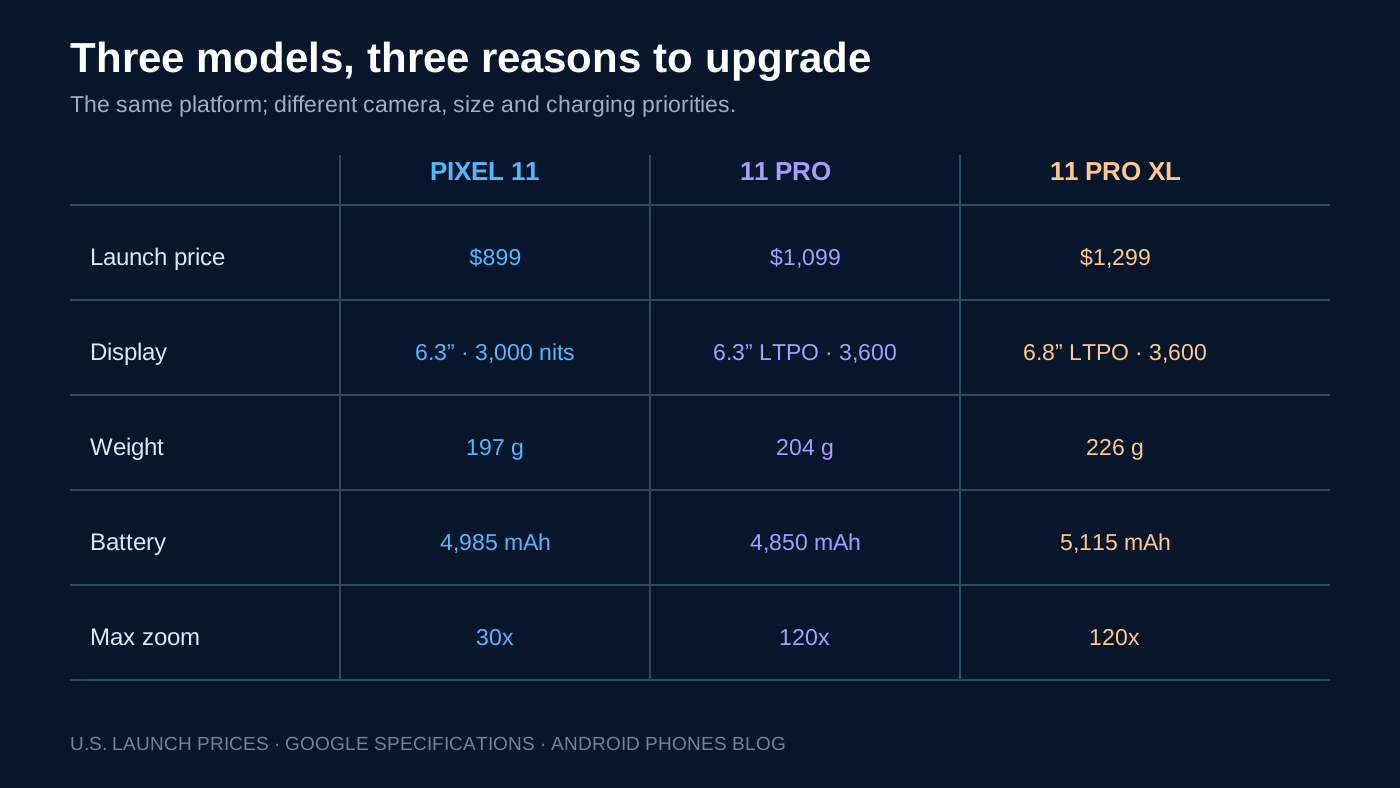
| Specification | Pixel 11 | Pixel 11 Pro | Pixel 11 Pro XL |
|---|---|---|---|
| U.S. launch price | From $899 | From $1,099 | From $1,299 |
| Display | 6.3-inch Actua, 60–120Hz | 6.3-inch Super Actua LTPO, 1–120Hz | 6.8-inch Super Actua LTPO, 1–120Hz |
| Peak brightness | Up to 3,000 nits | Up to 3,600 nits | Up to 3,600 nits |
| Weight | 197 g | 204 g | 226 g |
| Typical battery | 4,985 mAh | 4,850 mAh | 5,115 mAh |
| Approx. 30-minute wired charge | Up to 55% | Up to 55% | Up to 75% |
| RAM and storage | 12 GB; 256/512 GB | 12 GB at 256 GB; 16 GB at 512 GB/1 TB | 12 GB at 256 GB; 16 GB at 512 GB/1 TB |
| Rear cameras | 48 MP wide, 13 MP ultrawide, 10.8 MP 5x telephoto | 50 MP wide, 48 MP ultrawide, 48 MP 5x telephoto | Same as Pro |
| Maximum still-image zoom | 30x Super Zoom | 120x Pro Zoom | 120x Pro Zoom |
| HiLight | No | Yes | Yes |
| Processor | Tensor G6 + Titan M3 | Tensor G6 + Titan M3 | Tensor G6 + Titan M3 |
Charging percentages are Google’s estimates with compatible PPS equipment sold separately. Launch prices are U.S. starting prices before promotions, trade-in, tax or carrier terms; they should not be copied into an international purchase order.
Which Pixel 11 size is easiest to deploy?
Pixel 11 and Pixel 11 Pro occupy almost the same physical footprint. The base phone weighs 197 g; Pro adds only 7 g. Both fit users who want a current flagship without a 6.8-inch body, and both begin with 256 GB of storage.
Pixel 11 Pro XL is a different ergonomic decision. At 226 g, it is 29 g heavier than Pixel 11 and 22 g heavier than Pro. Its larger display improves maps, documents, dashboards, camera review and larger text, but also changes pocket fit, one-handed reach, vehicle mounts and protective-case dimensions.
For a fleet, do not assume “XL” means universally more productive. Give representative users a weighted case and approved screen protector, then test the tasks they repeat. A warehouse scanner, field inspector and traveling executive may reach different conclusions even when their app list is identical.
Is Pixel 11’s display good enough compared with Pro?
Pixel 11’s 6.3-inch Actua OLED runs from 60 to 120Hz and reaches a listed peak brightness of 3,000 nits. That is a strong general-purpose screen and the practical default for messaging, authentication, navigation and line-of-business apps.
Pixel 11 Pro uses a higher-resolution 6.3-inch LTPO OLED that can vary from 1 to 120Hz and reach 3,600 nits peak. Google also adds its new anti-scratch display coating to both Pro sizes and claims more than twice the scratch resistance of the previous generation under its testing. Pro XL applies the same display tier at 6.8 inches.
The Pro upgrade is easiest to justify for outdoor use, detailed photo review, premium resale positioning or users who value the higher-resolution LTPO panel. It does not automatically improve a form-based business workflow. Test high-brightness thermal behavior, polarised eyewear, gloves, text scaling and the actual protective glass used in deployment.
How much better are the Pro cameras?
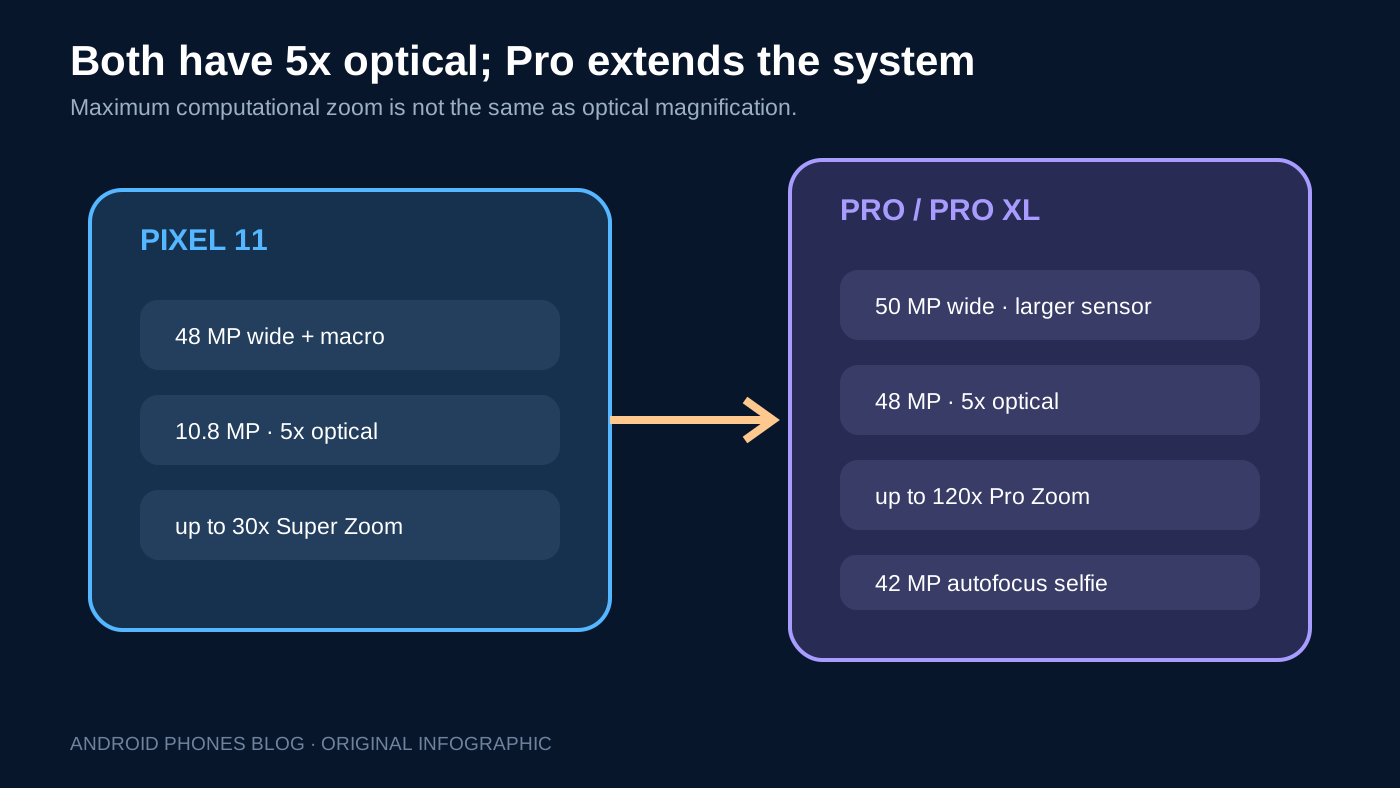
Pixel 11 has a genuinely versatile triple system: a 48 MP wide camera with Macro Focus, 13 MP ultrawide and 10.8 MP 5x telephoto. Google lists 30x Super Zoom. That is sufficient for ordinary documentation, social content, barcode capture and occasional distance shots.
The Pro models enlarge every important capture path. They use a 50 MP wide sensor, 48 MP autofocus ultrawide, 48 MP 5x telephoto and 42 MP autofocus selfie camera. Google lists 120x Pro Zoom, 8K recording through Video Boost, Pro controls and 50 MP portrait options.
The 120x number should not be treated as 120x optical zoom. The telephoto remains 5x optical; computational processing extends the usable range. Procurement tests should compare output at the exact distances, movement and lighting of the job.
For field and content teams, evaluate:
- Document edges, text legibility and color accuracy.
- Barcode and serial-number capture at working distance.
- Low-light focus speed and motion handling.
- Stabilization while walking or working from a vehicle.
- Upload time, storage consumption and mobile-data policy.
- Whether Video Boost or editing steps require cloud connectivity.
Do battery and charging make Pro XL the best business phone?
Pro XL has the largest typical battery at 5,115 mAh and Google’s fastest listed wired result: up to 75 percent in about 30 minutes with a compatible 45W PPS charger or higher. Pixel 11 and Pro are listed at up to 55 percent in about 30 minutes with compatible 30W PPS equipment.
The base Pixel 11 has a slightly larger nominal battery than the compact Pro—4,985 mAh versus 4,850 mAh—but capacity alone does not predict runtime. Display behavior, signal, camera use, background policy, AI processing and brightness affect the result. Google advertises more than 30 hours for all three under its test method.
All three support Pixelsnap and Qi2.2-certified wireless charging up to 25W. That can simplify shared desks and vehicle mounts, but buyers must quote compatible chargers, power adapters, cases and mounting hardware. A magnetic accessory label does not guarantee the required charging rate or thermal performance.
Run a shift-length pilot with the approved work profile. Record screen-on time, network conditions, camera/GPS use, charging time, heat and end-of-shift reserve. Select Pro XL only when its larger body materially reduces charging interruptions or improves the work surface.
What do Tensor G6, Gemini Nano and HiLight change?
Google positions Tensor G6 as its fastest Pixel processor and pairs it with the latest Gemini Nano. The company claims 25 percent faster web browsing, 15 percent quicker app launches, 50 percent more TPU compute and up to 3.5 times faster on-device AI at up to 3.5 times lower energy than Tensor G5 under its tests. These are Google comparisons for specified workloads, not independent guarantees for every app.
The practical procurement question is feature availability. Gemini Intelligence capabilities can vary by country, language, age, account, app and subscription. Some features use on-device processing; others require cloud services. Our on-device vs cloud AI guide provides a data and architecture checklist for business approval.
Pixel 11 Pro and Pro XL add HiLight, LED illumination around the camera flash that can show color-coded incoming calls and indicate hands-free Gemini activity. Google says more functions will arrive over time. HiLight is useful only if users can interpret it consistently and workplace policy allows the underlying AI or notification behavior.
Are security and update support the same across the lineup?
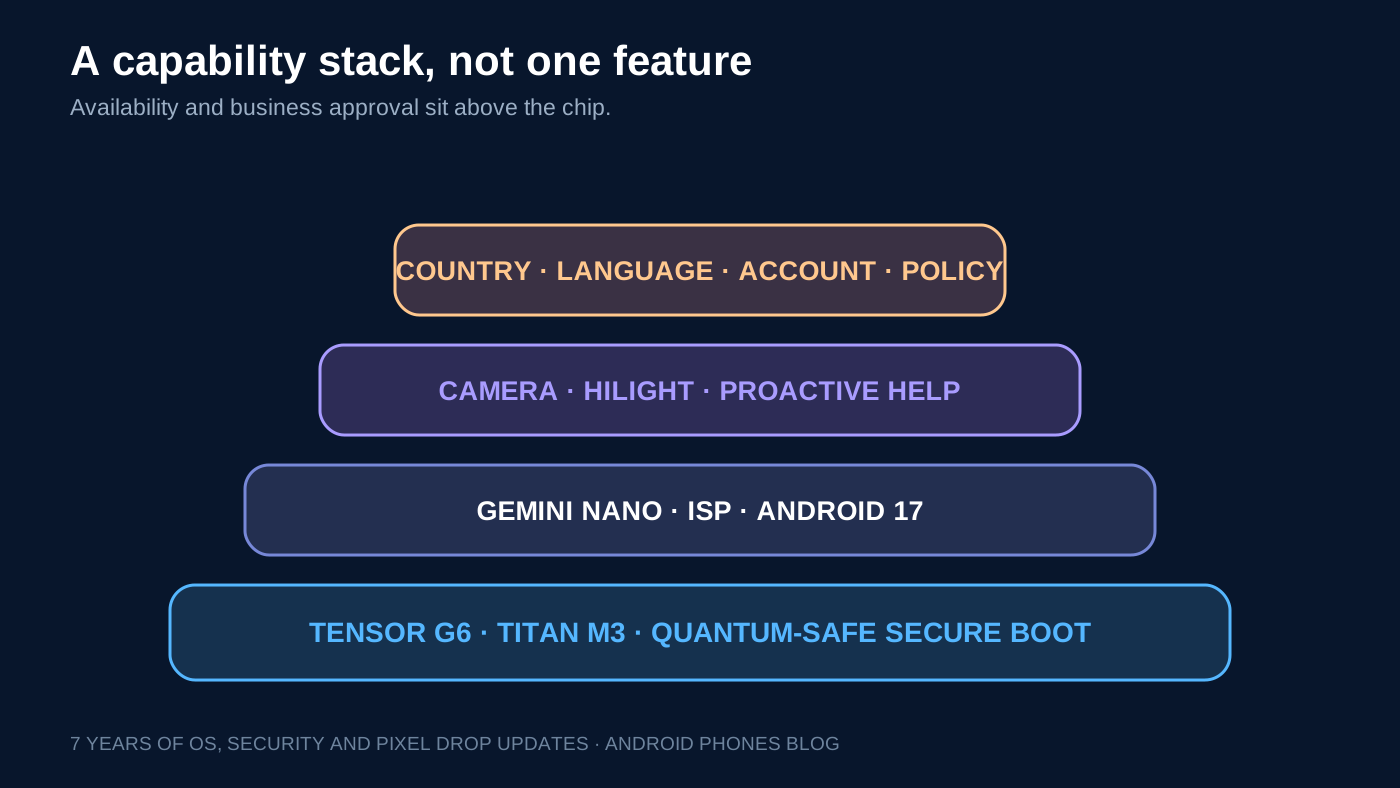
All three models use Tensor G6 and the Titan M3 security coprocessor. Google lists quantum-safe secure boot in hardware as part of the security stack, alongside the Tensor security core and Trusty trusted execution environment.
Google promises seven years of OS, security and Pixel Drop updates from each model’s first U.S. Google Store availability. That common support window makes the base Pixel 11 attractive for fleets: paying for Pro is not required to receive the advertised update term.
Long support does not remove operational work. Organizations still need enrollment validation, update rings, app compatibility, repair planning and end-of-life ownership. Follow the staged method in our Android 17 Pixel fleet upgrade guide before approving a broad rollout.
Google’s seven-year policy began with the Pixel 8 generation; our Pixel 8 support-history guide explains why this changed Android resale and lifecycle planning.
Which storage tier should a buyer order?
Every model starts at 256 GB. Pixel 11 also offers 512 GB. The Pro models add 1 TB and change memory at the higher tiers: Google’s official specification lists 12 GB RAM for the 256 GB Pro models and 16 GB RAM for 512 GB and 1 TB.
Do not use “Pro has 16 GB” as a blanket purchasing specification. Record storage and RAM together on the quotation. A supplier substituting 256 GB for 512 GB changes both capacities.
Choose storage from measured data creation and retention:
| Workload | Sensible starting point | Verify |
|---|---|---|
| Standard managed apps and communication | 256 GB | Offline app data and update reserve |
| Frequent photos, inspection video or offline maps | 512 GB | Retention and upload schedule |
| High-volume production capture | 1 TB Pro only | Backup, transfer time and replacement risk |
Cloud storage is not a substitute for device space when connectivity is weak or policy requires local retention. Conversely, buying 1 TB for every employee can trap budget in unused inventory.
Which Pixel 11 should retailers and fleets choose?
| Buyer or role | Best starting choice | Reason |
|---|---|---|
| General retail assortment | Pixel 11 | Lowest entry price with telephoto, 256 GB and full support term |
| Compact premium buyer | Pixel 11 Pro | Pro cameras and display without XL size |
| Creator or field imaging role | Pixel 11 Pro | Larger sensors, Pro controls and 120x computational zoom |
| Large-screen executive or navigation use | Pixel 11 Pro XL | 6.8-inch panel, largest battery and fastest charging |
| Cost-controlled standardized fleet | Pixel 11 | Same processor, security platform and support promise |
| Long shifts with frequent top-ups | Pilot Pro XL | Charging advantage may reduce downtime |
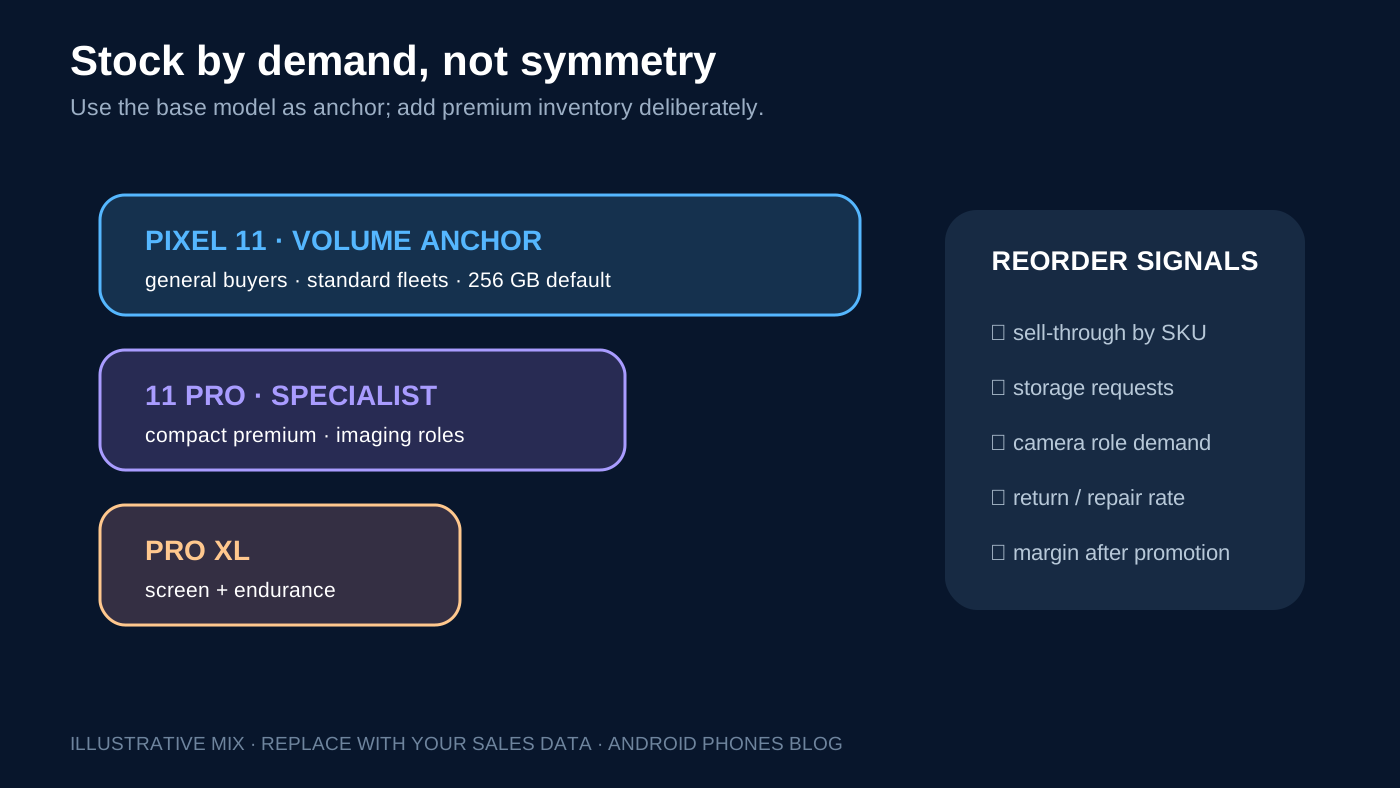
Retailers should not split stock evenly by model. Start with the likely volume model—normally Pixel 11—then use Pro and Pro XL to cover camera and large-screen demand. Track sell-through by storage and color before repeating the order.
What should a bulk-purchase RFQ specify?
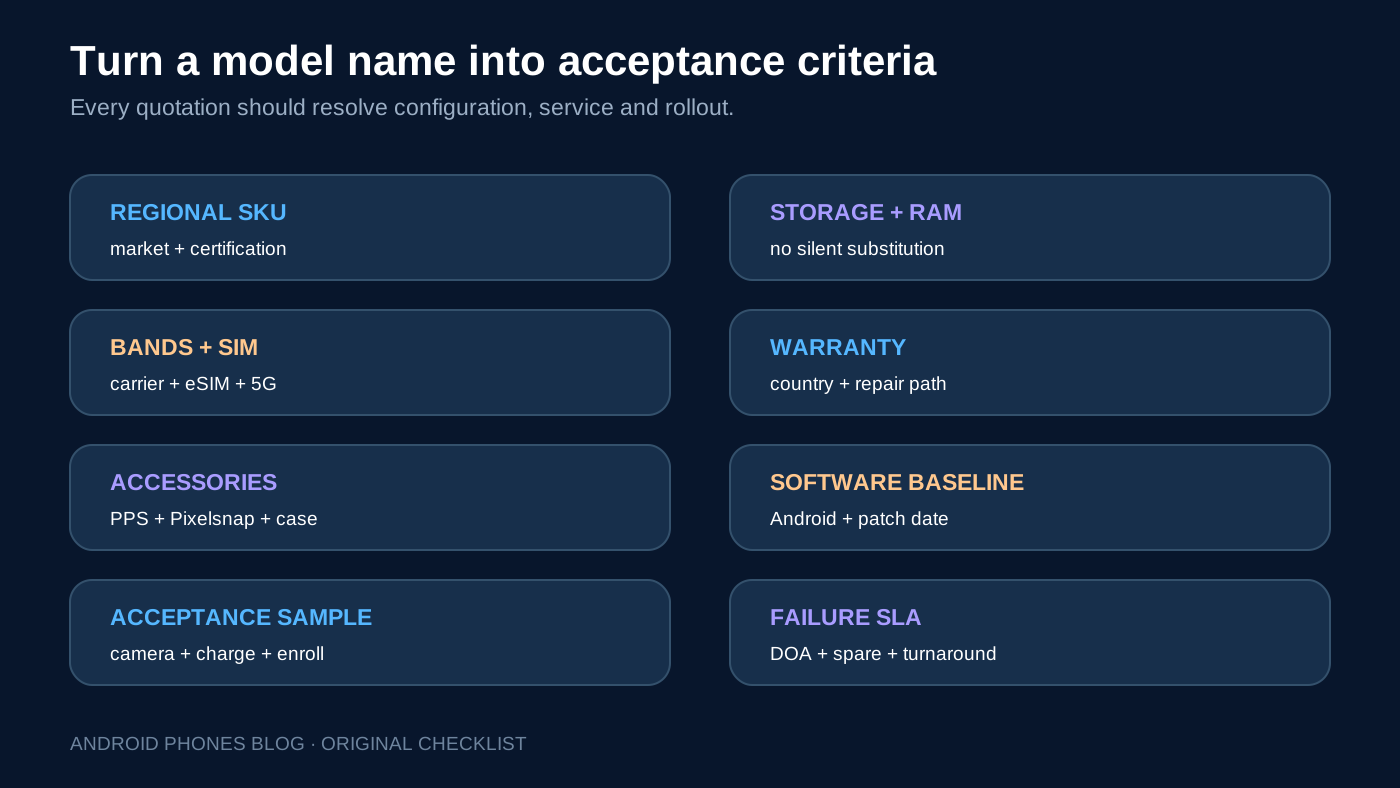
Request more than a model name and storage number.
- Exact regional model and regulatory market.
- Storage/RAM combination and permitted substitutions.
- Carrier lock, SIM/eSIM format and required bands.
- Color mix and packaging condition.
- Warranty country, repair route and DOA terms.
- Charger, cable, Pixelsnap case and mount requirements.
- Android version and minimum security patch at delivery.
- Enrollment, asset labeling, acceptance sampling and replacement SLA.
AI and satellite features vary by market, language, account and network. List only required capabilities in the acceptance matrix and test them on the exact SKU. The history of Pixel 10 and Tensor G5 is useful context, but a previous-generation approval does not prove Pixel 11 compatibility.
Final recommendation
Pixel 11 is the strongest default for most buyers because it keeps Tensor G6, Titan M3, 5x optical zoom, 256 GB base storage, Qi2.2 charging and the seven-year update promise at the lowest price. Pixel 11 Pro is the meaningful upgrade for camera-first users who want a compact phone. Pixel 11 Pro XL should be chosen for its larger display, battery and faster charging—not because it is assumed to be faster than Pro.
For retail or fleet orders, validate the regional SKU, warranty, bands, AI availability and accessories before committing volume. The best model mix follows measured roles and sell-through, not an equal three-way split.